 WUXIA MARTIAL ARTS CENTER
Programs
Our Programs & Classes
Students and enthusiasts of martial arts have many reasons for their interest in the martial arts. Some are drawn to the physical fitness and weight-loss aspects of training. Others seek to add discipline and self control to their lives. While still others are concerned about safety and self-defense.
Whether you are interested in our programs for mental or physical well being, WUXIA MARTIAL ARTS CENTER (YMAA Wuxia) offers a number of programs that will fit your developmental needs and your busy schedule as well. Click here to view our Weekly Class Schedule.
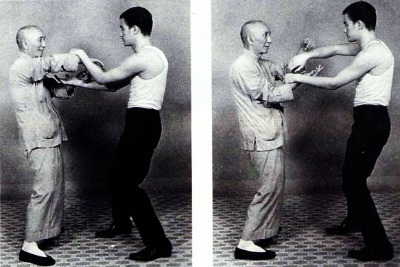
Wing Tsun Kung Fu
Wing Tsun (pronounced 'wing-chun') is a complete system of self-defense which works for everyone regardless of size, strength, gender or athleticism. Classical Wing Tsun teaches students the theory, concepts, and artisitic aspects of the style. Practical (Competitive) Wuxia Wing Tsun teaches students how to use Wing Tsun under pressure in all ranges of sparring, (Boxing, Kickboxing, Clinch, Wrestling, Ground fighting, MMA, Weapons, etc.., and develops conditioning, fighting spirit, and athleticism.
The goal of Wing Tsun is to teach practical self-defense in the shortest amount of time possible. Its techniques are based on positioning, leverage and simple physics, allowing the student to borrow the opponent's strength and turn it against them.
Wing Tsun is practiced by close to 1 million practitioners world-wide in over 64 countries. In Europe, nearly 75% of the military special forces and anti-terrorist units either teach Wing Tsun or incorporate it into their close-quarter battle (CQB) training programs.
The modern system of Wing Tsun is a systematic training method which allows the student to learn quickly. This training method is unique to Wing Tsun and brings students to a real level of self-defense skill in a short period of time.
Our Wing Tsun Kung Fu for Adults program is a goal-oriented self-defense program that provides Adults with a social outlet and a high energy Kung Fu experience.
In addition to a fun and physically challenging curriculum, our program offers mental stimulation and a support structure that can help adults better manage everyday stresses.
Benefits of Wing Tsun Kung Fu
Fitness
Develops coordination
Builds strength
Builds self-confidence
Increases endurance
Self Defense Skills
To observe a Wing Tsun Kung Fu class please email scotttarbell@aol.com

Filipino Martial Arts - Modern Arnis

Modern Arnis is the system of Filipino fighting arts founded by Remy Presas as a self-defense system. His goal was to create an injury-free training method as well as an effective self-defense system in order to preserve the older Arnis systems. The term Modern Arnis was used by Remy Presas' younger brother Ernesto Presas to describe his style of Filipino martial arts; since 1999 Ernesto Presas has called his system Kombatan. It is derived principally from the traditional Presas family style of the Bolo (machete) and the stick-dueling art of Balintawak Eskrima, with influences from other Filipino and Japanese martial arts.
One of the characteristics of Filipino martial arts is the use of weapons from the very beginning of training and Modern Arnis is no exception. The primary weapon is the rattan stick, called a cane or baston (baton), which varies in size, but is usually about 28 inches (71 cm) in length. Both single and double stick techniques are taught, with an emphasis on the former; unarmed defenses against the stick and against bladed weapons (which the stick is sometimes taken to represent) are a part of the curriculum.
Training covers empty-hand self-defense (striking, locking, throwing, etc.) as well as the trademark single and double stick techniques of the Filipino martial arts. Other aspects of the art include espada y daga (sword and dagger fighting), sinawali (double stick weaving patterns), and tapi-tapi (locking drills with the stick). In addition to partner drills, Modern Arnis includes the use of anyo (kata), solo forms both with and without the stick. Emphasis is placed on fitting the art in with a student's previous training ("the art within your art"), smoothly reacting to changing situations in the fight ("the flow"), and countering the opponent's attempt to counter strikes directed at him ("tapi-tapi"). Practitioners are called arnisadors or Modern Arnis players.[8]
In addition to its Filipino influences, elements of Judo, Shotokan Karate, and Wally Jay's Small Circle Jujutsu appear in the system. Furthermore, Sifu Scott W. Tarbell a Lakan Tatlo (3rd degree) Black Belt in Modern Arnis added Long weapons such as staff and spear, as well as a vast amount of Chin Na (Joint Locks), Shuai Jiao (Chinese Wrestling), and practical sparring in all ranges with short and long weapons, bladed weapons, and empty hand. Sifu Scott continues his training under Grandmaster Brian Zawalinski and various masters within the FMA community.
Benefits of Modern Arnis
Fitness
Develops coordination
Builds strength
Builds self-confidence
Increases endurance
Self Defense Skills
To observe a Modern Arnis class please email scotttarbell@aol.com
Chin Na / Shuai Jiao

Chin Na focuses on joint locks and traditional Chinese Qinna (Chin Na), the set of joint lock techniques used in the Chinese martial arts to control or lock an opponent's joints or muscles/tendons so he cannot move, thus neutralizing the opponent's fighting ability. Qinna Shu ( shù meaning "technique") literally translates as lock catch technique. Some schools simply use the word na ("hold") to describe the techniques. Qinna features both standing and ground-based grappling techniques. Shuai Jiao (Chinese Wrestling) is taught in conjunction with Chin Na.
Some Chinese martial arts instructors focus more on their qinna techniques than others. This is one of the many reasons why the qinna of one school may differ from that of another. All martial arts contain qinna techniques in some degree. The southern Chinese martial arts have more developed qinna techniques than northern Chinese martial systems. The southern martial arts have much more prevalent reliance on hand techniques which causes the practitioner to be in closer range to their opponent. There are over 700 qinna traditional techniques found in all martial arts.
Qinna can generally be categorized (in Chinese) as:
"Fen jin" or "zhua jin" (dividing the muscle/tendon, grabbing the muscle/tendon). Fen means "to divide", zhua is "to grab" and jin means "tendon, muscle, sinew". They refer to techniques which tear apart an opponent's muscles or tendons.
"Cuo gu" (misplacing the bone). Cuo means "wrong, disorder" and gu means "bone". Cuo gu therefore refer to techniques which put bones in wrong positions and is usually applied specifically to joints.
"Bi qi" (sealing the breath). Bi means "to close, seal or shut" and qi, or more specifically kong qi, meaning "air". "Bi qi" is the technique of preventing the opponent from inhaling. This differs from mere strangulation in that it may be applied not only to the windpipe directly but also to muscles surrounding the lungs, supposedly to shock the system into a contraction which impairs breathing.
"Dian mai" or "dian xue" (sealing the vein/artery or acupressure cavity). Similar to the Cantonese dim mak, these are the technique of sealing or striking blood vessels and chi points.
"Rou dao" or "rou shu dao" (soft techniques) which generally refers to the techniques deemed safe for sparring and/or training purposes.
Qin means to capture or lock, na means to grab or hold, and while those actions are very often executed in that order, the actions can be performed distinctly in training and self-defense: a trap isn't always followed by a lock or break, and a lock or break is not necessarily set up by a trap.
Benefits of Chin Na
Functionality for all styles
Develops coordination
Builds strength
Builds self-confidence
Increases Restraint Skills
Self Defense Skills
To observe a Chin Na / Shuai Jiao class please email scotttarbell@aol.com

Brazilian Jiu-Jitsu
This class emphasizes ground fighting and Brazilian Jiu-Jitsu. Brazilian Jiu-Jitsu is a martial art and combat sport based on ground fighting (ne-waza) and submission holds. It focuses on the skill of taking an opponent to the ground, controlling one's opponent, gaining a dominant position, and using a number of techniques to force them into submission via joint locks or chokeholds.
No Gi BJJ and Submission wrestling (also known as submission fighting, submission grappling, sport grappling, or simply as no-gi is a general term for martial arts and combat sports that focus on clinch and ground fighting with the aim of obtaining a submission through the use of submission holds. The term "submission wrestling" usually refers only to the form of competition and training that does not use a gi, or "combat kimono", of the sort often worn with belts that establish rank by color, though some may use the loose trousers of such a uniform, without the jacket.
The sport of submission wrestling brings together techniques from folk wrestling (Catch wrestling a.k.a. catch-as-catch-can), Judo, Greco-Roman wrestling, Brazilian Jiu-Jitsu, jujutsu (of the traditional form),Shuai Jiao, and Sambo.
Submission fighting as an element of a larger sport setting is very common in mixed martial arts, Brazilian jiu-jitsu, catch wrestling, and others. They are also known for using submission techniques normally banned in other arts or competitions such as heel hooks, toe holds, wrist and finger locks.
Brazilian Jiu-Jitsu / Submission Wrestling / No Gi BJJ promotes the concept that a smaller, weaker person can successfully defend against a bigger, stronger assailant by using leverage and proper technique, taking the fight to the ground – most notably by applying joint-locks and chokeholds to defeat the other person.
Brazilian Jiu-Jitsu / Submission Wrestling / No Gi BJJ training can be used for sport grappling tournaments and mixed martial arts (MMA) competition or self-defense. Sparring (commonly referred to as "rolling") and live drilling play a major role in training.